Keynotes
Keynote 1 · Wednesday, November 4, 9:30–10:30
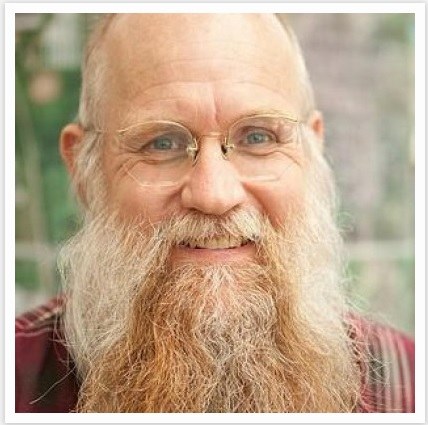
Scott Morehouse
Software Development, Esri (Retired)
The Heart of The Watermelon: Some Reflections on The Foundations of Spatial Computing
Spatial computation (and the GIS concept) exists at the intersection of several intellectual traditions. This context will be used to discuss the early days of GIS, the emergence and development of spatial computation and database systems, and future opportunities for research.
Biography
Scott studied at a variety of schools, finally completing an interdisciplinary degree in Geography, Ecology, and Computer Science from Hampshire College in 1977.
Scott worked as a research associate in the Laboratory for Computer Graphics and Spatial Analysis, Harvard School of Design, from 1977 to 1981, where he worked as a programmer on the Odyssey project. He was responsible for the development of the Polyps thematic mapping program and for the preparation of Odyssey for broad distribution as a software package.
In 1981, Scott joined Jack Dangermond and Esri in Redlands, California. Scott led the development of GIS software at Esri from 1981 to 2014, building several generations of GIS technology: ARC/INFO, ArcView, ArcGIS, and ArcGIS Online. In addition to his role as software designer and developer, Scott has worked hard to grow a capable team of programmers and system designers at Esri in support of an active and engaged community of users.
In 2014, Scott transferred responsibility for overall Esri software development to Sud Menon. He managed Esri's research and development centers in Zurich, Beijing, Washington, and Portland until retiring in 2019.
Keynote 2 · Thursday, November 5, 9:00–10:00
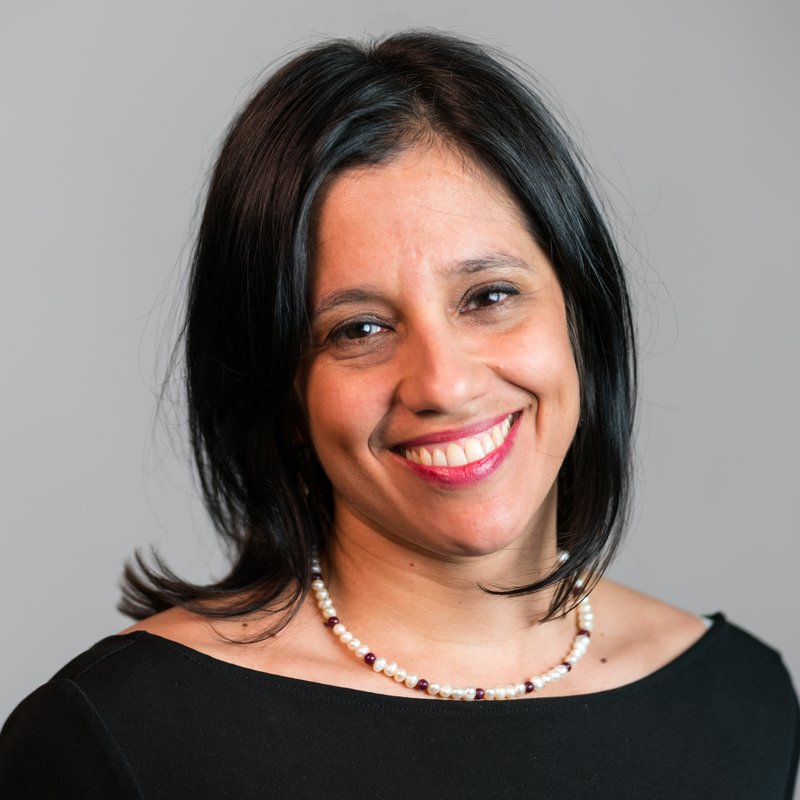
Marta C. González
Civil and Environmental Engineering, University of California, Berkeley
Complexity Science for Urban Planning: From Job Access to Climate Resilience
Cities face overlapping shocks, from pandemics and economic downturns to a changing climate. Planning for them requires knowing how people actually use urban space. Today, mobile phone data, synthetic populations and administrative records reveal when and where people move, work and consume energy, at a resolution that was unimaginable a decade ago. In this talk I show how tools from complexity science, including networks, scaling laws and economic complexity, turn these data into interpretable models that can guide policy.
I start with job access. WorkReach is a discrete choice model that incorporates the economic complexity of workplaces and the informality of residential areas. Applied to Los Angeles, the San Francisco Bay Area, Mexico City and Rio de Janeiro, it reproduces commuting flows as well as standard benchmarks while revealing how workers trade distance for opportunity. Workers consistently commute farther to economically complex areas, while the role of informality differs between U.S. and Latin American cities. Utility-based accessibility exposes disparities that distance-based metrics miss.
I then turn to decarbonization. Mobility data allow us to estimate vehicle emissions trip by trip. For buildings, simple data such as gas bills and building footprints reveal that heat losses follow a Zipf-like distribution, so retrofitting about 16% of buildings could cut a city's gas consumption by roughly 40%. Finally, I present a network approach to wildfire risk that maps who shares responsibility for mitigation across interconnected properties. Together, these studies show how complexity science can move urban planning from describing cities to targeting interventions where they matter most.
Biography
Marta Gonzalez is a Professor of Civil and Environmental Engineering and City and Regional Planning at UC Berkeley, and also a Physics Research faculty in the Energy Technology Area (ETA) at the Lawrence Berkeley National Laboratory (Berkeley Lab). Gonzalez’s research focuses on urban sciences, with a focus on the intersections of people with the built and the natural environment and their social networks. Her ultimate goal is to design urban solutions and enable caring development in the use of new technologies. Gonzalez has developed new tools that impact transportation research and discovered novel approaches to model human mobility and the adoption of energy technologies. She is a recipient of the prestigious Joseph M Sussman Prize for Frontiers in Built Environment best article award in 2021, the UN Foundation award in support of her research studying the consumption patterns of women in the developing world in 2016, and the Bill and Melinda Gates Foundation award to study access to financial services in the developing world in 2016. In 2023, she was named fellow of the Network Science Society for her seminal contributions to our understanding of human mobility and transportation networks, and for applying network modeling to solve societal problems in urban systems, and in 2024 she received the Lagrange-CRT Foundation Prize for her scientific research in the field of complexity sciences, its applications and dissemination.